A brilliant account of a couple of sophisticated jazz-age Americans on a jag around the French Riviera and other European hotspots in the 1920s, hobnobbing with fellow expatriates and distilling their existential ennui in a flurry of cocktail conversations and domestic strife.
Fitzgerald manages somehow to create a very adult, credible tone and an atmosphere of significance around his classy couple and their coterie, helped by his gift for witty, wry dialogues and his narrative skill. And (…)
Accueil > Novels
Novels
see => THE INDEX OF THE 96 NOVELS ON THIS SITE, by author and by date
see also => Our selection of the world’s greatest novels
-
 "Tender is the Night" by F. Scott Fitzgerald (1933)
22 avril, par F. Scott Fitzgerald -
 "Lost Horizon" by James Hilton (1932) - the novel of Shangri-La
15 avril, par James HiltonThe story of a very special and hard-but-not-quite-impossible-to-believe-about valley in the high Tibetan mountains called Shangri-La where wandering explorers and others have found an incredible haven hidden far away from the stress and strife of the outside world and where they grow strangely wise while not really growing much older.
A remarkably well-recounted spiritual adventure story that introduced the concept and the wonderful word Shangri-La into the English language. Thank you, (…) -
 "The Picture of Dorian Gray" by Oscar Wilde (1891)
5 février, par Oscar WildeA sophisticated, very immoral and very witty account of the rise and fall of the most beautiful (to use the flowery terminology of this classic of decadent aestheticism) young man of his time, Dorian Gray, who sells his soul at the age of twenty to remain as pristinely handsome and youthful as he was then for the rest of his life – at the expense of his morals, of his social reputation, of his psychological and physical well-being and, especially, of the condition of the eponymous portrait (…)
-
 "Barry Lyndon" by William Thackeray (1844)
8 janvier, par William ThackerayThe first novel by the immortal author of Vanity Fair, this account of a dashing, immensely proud and ambitious but penniless Irish soldier-of-fortune’s rise to vast wealth and fall therefrom was inspired both by the memoirs of a well-known 18th century adventurer [1] and by Casanova’s Memoirs Written by Himself, and was possibly influenced to a certain extent by Tom Jones, a similar tale of adventure and braggadocio by Thackeray’s 18th-century model Henry Fielding, whom he greatly admired (…)
-
 "Lady Chatterly’s Lover" by D. H. Lawrence (1928)
13 novembre 2023, par D. H. LawtenceLord Chatterley has come back from the Great War paralyzed from the waist downwards, and Lady Chatterley soon tires of the charm of sitting-room conversations with him and their visitors about the life of the intellect and the woes of the world and begins to yearn for other satisfactions. Which she certainly does get in a big way from the estate’s reclusive, misanthropic, dialect-speaking and very virile game-keeper, as is described in graphic detail by the pen of one of the finest (…)
-
 "The Great Gatsby" by F. Scott Fitzgerald (1925)
6 novembre 2023, par F. Scott FitzgeraldAll that glitters is not gold… This sparkling tale of the brilliant social life in the Long Island of the glittering Twenties makes good reading indeed for those non-socialites among us for whom the rich, handsome, elegant, cultured, and mysterious eponymous (war-)hero would be quite insupportable if he had turned out to really be all those American-dreamy good things with no redeeming awfulnesses to get him back down nearer to our lowly level.
The story reads for the most part in its (…) -
 "Ulysses" by James Joyce (1924)
16 octobre 2023, par James JoyceThis most famous of Irish novels is a quite amazing literary tour de force. It has an extraordinary, experimental, let’s-see-what-can-be-done-with-words side to it which was very much in tune with the questioning drive for innovation and experimentation in art, music and literature that dominated intellectual and artistic Europe at the time of its conception during teens and twenties of the 20th Century.
And it’s an impressive demonstration of the author’s phenomenal mastery of the English (…) -
 "A Portrait of the Artist as a Young Man" by James Joyce (1916)
9 octobre 2023, par James JoyceThe first novel published by the future author of Ulysses, a largely autobiographical account of a young boy emotionally and intellectuelly coming of age with an intensely Roman Catholic upbringing in the city of Dublin at the beginning of the 20th century, a city and a country then under foreign rule.
(85,500 words)
An e-book is available for downloading below.
All of the footnotes have all been added specially for this site. CHAPTER I CHAPTER II CHAPTER III CHAPTER IV CHAPTER V (…) -
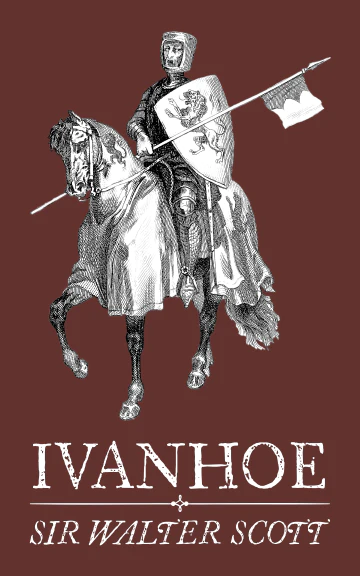 "Ivanhoe’ by Walter Scott (1819)
6 septembre 2023, par Walter ScottWalter Scott’s best-known work, a historical novel that established him as the most celebrated European novelist for a good long time, recounting the complex struggles in 12th-century England between the Norman rulers – Richard Coeur-de-Lion and his ambitious brother John – and their numerous enemies and opponents, notably the Saxon nobility that still dreamed of reestablishing their authority and also highly-organized bands of outlaws in parts of the realm such as the forests of (…)
-
 "Sons and Lovers" by D. H. Lawrence (1913)
4 septembre 2023, par D. H. LawtenceThe third and best-known novel (with Lady Chatterly’s Lover) of the brilliant English novelist, poet, short-story writer, travel writer, literary critic, globe-trotter, iconoclast and eternal exile D. H. Lawrence, this is an intense and sensitive family drama set in the coal-mining area of Nottingham in central England at the turn of the 20th century.
A finely-drawn psychological drama centered on the life of the youngest son of the family, Paul Morel, his conflictual relations with his (…)