Our final anthology of the best of Jack London’s stories, his domain of excellence. 1. ONE MORE UNFORTUNATE (1895) A tired and very disillusioned violinist in a low-dive nightclub thinks back upon his upbringing on a farm, on his youthful discovery of music and the organ and the flute, and on his frustrated dreams of becoming an accomplished musician. In spite of a final display of anguished virtuosity the evening ends on an even more desperate note than it started. (2,000 words)
2. THE (…)
Articles les plus récents
-

"The Kanaka Surf" and other stories by Jack London
25 December 2023, by Jack London -

"A Child’s Christmas in Wales" by Dylan Thomas (1950)
16 December 2023, by Dylan ThomasThe celebrated prose poem about his memories of Christmas in his native Wales by the immortal author of Fern Hill, Do Not Go Silent Into That Dark Night, And Death Shall Have No Dominion and many other unforgettable poems.
It was written in 1945 to be read by the author on a cultural program of the BBC, but the powers in place finally declined to let the unpredictable, unconventional and uncontrollable poet read it on the air, and it was first published in 1950 in the American magazine (…) -
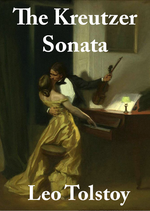
"The Kreuzer Sonata" by Leo Tolstoy (1889)
11 December 2023, by Leo TolstoyThe narrator relates how, in the middle of a conversation with other travellers on a train about the double modern moral standards for men and women, he had met the celebrated Posdnicheff, who had recently been acquitted for the murder of his wife because she had been unfaithful to him (dixit P). The rest of the story is P’s account of his life with his wife, his growing suspicions about her relationship with a suave and very brilliant fellow musician after he comes to a reception given by (…)
-

"Notes From the Underground" by Fyodor Dostoyevsky (1864)
4 December 2023, by Fyodor DostoyevskiThe narrator is a social misfit of forty who ruminates at length on his defects and his endless humiliating experiences and conflicts, for he is a (Russian) intellectual with great sensitivity and a particularly acute sense of the failings of the modern world and of everyone in it, especially himself.
The tone is set from the first sentence that says it all (“I am a sick man… I am a spiteful man.”) and rapidly scales the height of self-denigration as he describes his miserable life and (…) -
"The Terrible Night" and other humorous stories by Anton Chekhov
27 November 2023, by Anton ChekhovA series of short, light and amusing tales from the early part of the great master’s writing career, while he was still at university (studying to become a doctor) and shortly afterwards.
They have all been translated specially for this site. 1. THE MOTHER-IN-LAW LAWYER (1883) Michel’s mother-in-law comes for a talk with him a month after his marriage to her daughter Lisa. She berates him for the life he makes Lisa lead, reading and studying instead of going out dancing. Michel tells her (…) -

"The Heritage" – a major novella by Guy de Maupassant (1884)
20 November 2023, by Guy de MaupassantIn this ambitious novella on an eternal theme – or rather on eternal Maupassantian themes: social climbing, the lust for lucre, virility, infertility, infidelity and having children – we follow the career of an up-and-coming young civil servant who arrives at work every day before his colleagues, works much harder and longer than they do, curries favour with his superiors and is obviously destined for rapid advancement up through the ranks, especially after he has married the daughter of (…)
-
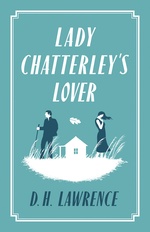
"Lady Chatterly’s Lover" by D. H. Lawrence (1928)
13 November 2023, by D. H. LawtenceLord Chatterley has come back from the Great War paralyzed from the waist downwards, and Lady Chatterley soon tires of the charm of sitting-room conversations with him and their visitors about the life of the intellect and the woes of the world and begins to yearn for other satisfactions. Which she certainly does get in a big way from the estate’s reclusive, misanthropic, dialect-speaking and very virile game-keeper, as is described in graphic detail by the pen of one of the finest (…)
-

"The Great Gatsby" by F. Scott Fitzgerald (1925)
6 November 2023, by F. Scott FitzgeraldAll that glitters is not gold… This sparkling tale of the brilliant social life in the Long Island of the glittering Twenties makes good reading indeed for those non-socialites among us for whom the rich, handsome, elegant, cultured, and mysterious eponymous (war-)hero would be quite insupportable if he had turned out to really be all those American-dreamy good things with no redeeming awfulnesses to get him back down nearer to our lowly level.
The story reads for the most part in its (…) -

"The Tragedian" and other stories by Anton Chekhov
30 October 2023, by Anton ChekhovTABLE OF CONTENTS
1. THE TRAGEDIAN (1883) The daughter of a police captain becomes so enthusiastic about the theatre and about actors after seeing her first performance by a travelling company that she goes there every night, and ends up running away with the chief tragedian. But life on the road for an impoverished actor’s wife is not as magical as she’d imagined. (1,300 words)
2. THE BIRD MARKET (1883) A colourful and engaging description of a Moscow marketplace specialised in selling (…) -

"The Odyssey of a Street Girl" and other stories by Guy de Maupassant
23 October 2023, by Guy de MaupassantSeven more of the master’s best stories, most with a rather racy, distinctively Gallic touch and all with a distinctively direct, straightforward and rather elegant Maupassantian touch.
They have all been translated specially for this site. TABLE OF CONTENTS
1. THE WINDOW The narrator recounts his long, intensive courtship of the well-known, wealthy, attractive, intelligent, really quite ideal Mme de Jadelle, and how a fateful false step unfortunately upset his careful plans regarding (…)